
Mopping up puddles in your basement after a heavy Blue Ridge downpour is more than exhausting—it is a clear warning that your home’s exterior defenses are failing. While extending gutter downspouts or adjusting exterior grading are great first steps, surface-level solutions cannot stop groundwater once it rises underneath your foundation.
When external rainwater saturates the deep clay soils common throughout the Roanoke Valley, it creates a massive underground water table. This water exerts an immense force known as hydrostatic pressure against your below-grade walls and floor slab. If that pressure has nowhere to go, water will relentlessly find its way into your home. This guide highlights the critical signs indicating your home has crossed the line from a simple dampness issue to needing a professional interior basement drainage system.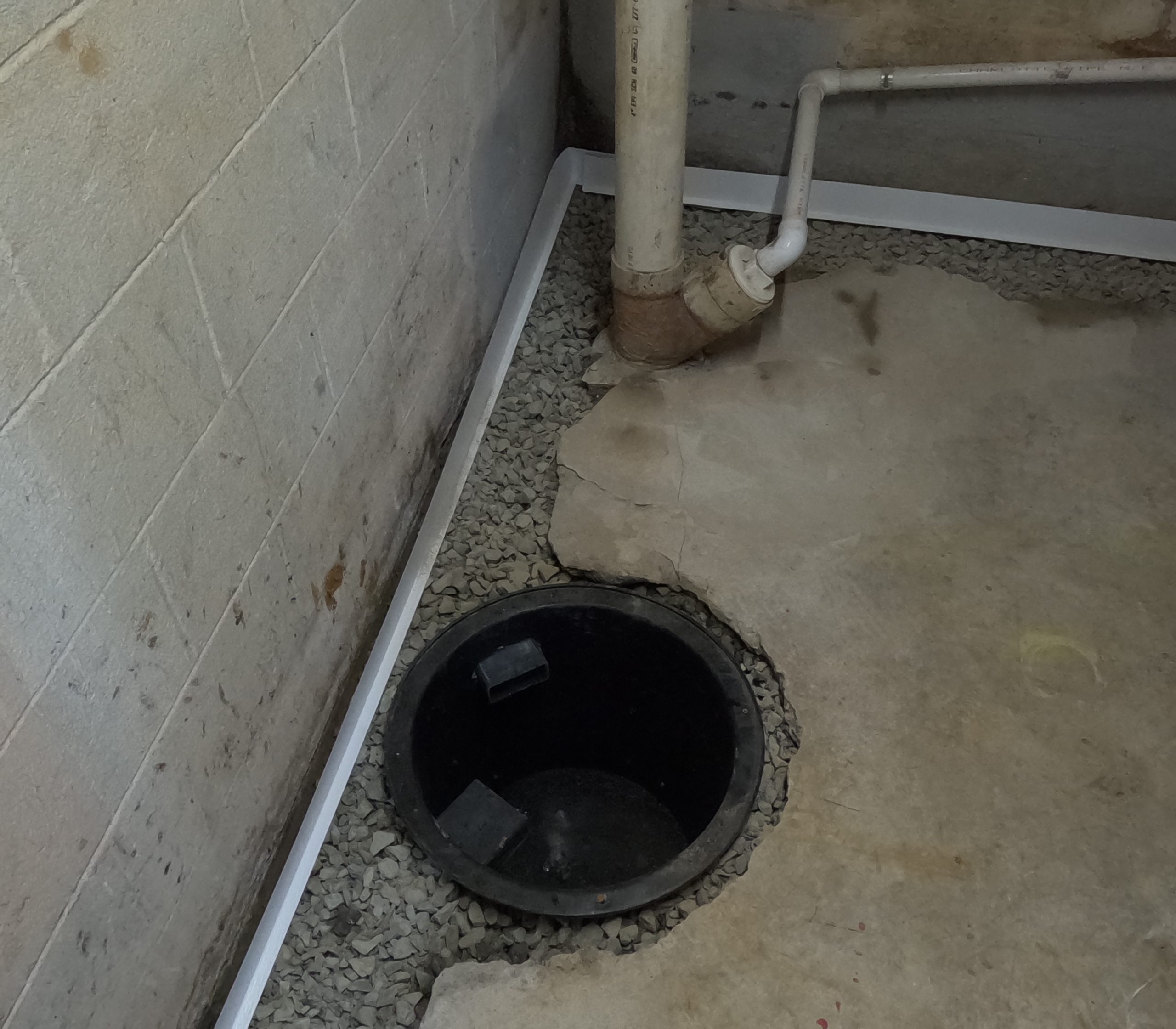
Critical Indicators Your Foundation Needs Sub-Floor Drainage
Water damage in a basement rarely stays isolated. If your home exhibits any of the following symptoms, the pressure building beneath your concrete slab requires an engineered sub-floor solution to intercept the water before it floods your living space.
1. Seepage Along the Floor-to-Wall “Cove Joint.”
The most common entry point for foundation groundwater is the cove joint—the tiny seam where your concrete floor slab was poured against your masonry foundation walls. Because this joint is a natural structural break, rising groundwater under hydrostatic pressure forces its way up through this seam first. If you consistently notice standing water or dark, damp stains traced strictly along the perimeter edge of your basement floor, your home is actively telling you that the water table underneath has risen higher than your floor line.
2. Multiple Recurring Wall Leaks
Patching a single concrete crack with DIY hydraulic cement might provide temporary relief. However, if water begins seeping through multiple cracks, mortar joints, or porous blocks simultaneously, localized repairs are useless. Water is lazy; if you block it in one spot without relieving the underlying pressure, it will simply migrate along the wall to the next weakest point. A recurring pattern of multi-point leaks indicates that the entire exterior wall is under hydraulic load and requires a full-perimeter interior drainage channel.
3. Active Floor “Weeping” and Damp Concrete
Have you ever pulled up a cardboard box or an old rug from your basement floor only to find the concrete underneath completely damp? Through a process called capillary action, porous concrete pulls moisture upward from wet soil like a sponge. When the soil below your slab remains permanently waterlogged, the concrete floor will actively “weep.” This persistent dampness destroys floor coverings, warps subfloors, and keeps indoor relative humidity levels high enough to support mold colonies.
How an Engineered Interior Drainage System Resolves the Issue
Rather than attempting the nearly impossible task of completely waterproofing the outside of an existing foundation wall—which requires destroying porches, patios, and mature landscaping—a professional interior sub-floor drainage system handles the problem from the inside with absolute mechanical certainty.
 The installation follows a precise structural sequence:
- Slab Trenching: A neat, continuous channel is carefully excavated through the concrete floor along the inside perimeter of your foundation walls.
- Hydrostatic Relief: Small weep holes are drilled into the bottom cores of hollow masonry blocks, allowing trapped wall moisture to drain down into the new channel instead of building up inside the wall.
- Pipe Layout: A heavy-duty, perforated drainage pipe wrapped in filtering aggregate is positioned within the trench. This pipe sits below the floor level, acting as an artificial, low-resistance path for groundwater.
- Sump Basin Integration: The sub-floor pipes are gravity-fed directly into a high-capacity sump pump basin equipped with a mechanical float switch and an airtight lid.
- Concrete Restoration: The floor slab is seamlessly repoured with fresh concrete, completely concealing the drainage system from view while leaving your basement clean and ready for finishing.
Frequently Asked Questions
How long does it take to install an interior basement drainage system?
For an average-sized residential home in our region, a skilled local crew can complete the full perimeter excavation, pipe laying, sump pump integration, and concrete restoration within 2 to 4 operational days. Your basement is left fully functional, clean, and structurally protected.
Will an interior drainage system eliminate musty basement smells?
Yes, when paired with a reliable sump pump and proper humidity control. Musty odors are caused by mold off-gassing, which requires a persistent relative humidity level above 60% to thrive. By capturing groundwater below the slab level and routing it away before it evaporates into your indoor air, you dry out the environment and eliminate the root cause of the smell.
What is the difference between an interior drainage system and a traditional exterior French drain?
While both rely on perforated pipes and gravel to manage water, an exterior French drain is installed shallowly in your yard to redirect surface runoff. An interior drainage system is installed deep beneath your basement floor slab specifically to relieve the massive, deep-earth hydrostatic pressure attacking your foundation walls.
Take Back Control of Your Basement Space
Stop treating the symptoms of a wet basement with temporary patches and recurring stress. At SURE-DRI, we are a trusted, non-franchise local contractor serving Southwest Virginia since 2002. We don’t believe in high-pressure corporate sales pitches or selling you expensive full-perimeter tear-outs if you don’t need them. We provide honest, field-tested diagnostics and clean craftsmanship to give you a permanently dry basement at a competitive price.
Protect your property value, your indoor air quality, and your peace of mind. Contact our Roanoke office today to schedule a comprehensive, zero-pressure basement moisture evaluation.


