
For many homeowners in the Roanoke Valley, the changing seasons bring more than just beautiful mountain views and shifting foliage. They also bring significant changes to the soil beneath our feet. If you have recently noticed a new crack in your drywall or a door that suddenly refuses to latch, you are likely asking yourself a stressful question: Is my house just “settling” with the weather, or am I facing a catastrophic foundation failure?
Understanding the difference between minor seasonal movement and serious foundation settlement is critical. In Southwestern Virginia, our unique geological makeup—characterized by heavy clay and limestone—makes foundation health a complex issue. While every home moves slightly, ignoring the red flags of structural instability can lead to thousands of dollars in avoidable damage. At SURE-DRI, our team, led by a licensed structural engineer, is here to help you decipher these signs and protect your home’s long-term value.
 Is Your Home Just “Settling” or is it Sinking?
The term “settling” is often used as a catch-all phrase, but in the world of structural engineering, there is a massive distinction between the two. Seasonal settling occurs when the soil expands and contracts based on moisture levels. During a humid Roanoke summer, clay soils soak up water and swell; during a dry spell, that same soil shrinks, causing the house to shift slightly. This often results in hairline cracks that may even close up on their own as the seasons change.
Foundation settlement, however, is a downward movement that occurs when the soil can no longer support the weight of the structure. This is often caused by “shrink-swell” cycles that eventually lead to soil fatigue or erosion. Unlike seasonal shifting, true settlement is progressive. It does not “fix itself,” and the longer it is ignored, the more the structural integrity of the entire building is compromised.
5 Red Flags That Demand a Professional Inspection
If you are unsure whether your home is in danger, look for these five specific warning signs that point toward structural settlement rather than simple seasonal movement.
1. Stair-Step Cracks in Exterior Brickwork
One of the most definitive signs of foundation failure is the “stair-step” crack. These cracks follow the mortar lines between bricks or cinderblocks. If you see a crack that looks like a set of stairs climbing up your exterior wall, it indicates that one section of the foundation is sinking faster than the rest. This is a clear signal of uneven settlement that requires immediate professional intervention.
2. Interior Doors and Windows That Stick
While wood can swell in Virginia’s humidity, doors and windows that suddenly stick or fail to latch are often the result of a shifting frame. When a foundation settles, the rectangular openings for your doors and windows become skewed into parallelograms. If you find yourself having to “lift” a door handle to get it to lock, your foundation may be pulling the house out of alignment.
3. Gaps Between the Wall and Ceiling
Take a close look at your crown molding or the corners where your walls meet the ceiling. If you notice a visible gap forming, it means the walls are pulling away from the internal structure. This is rarely a result of simple humidity and is almost always a sign that the perimeter of the foundation is sinking or tilting outward.
4. Sloping or Uneven Floors
Do you feel like you are walking slightly “downhill” in certain rooms? Sloping floors are a major indicator of foundation trouble. In homes with crawl spaces, this might indicate failing support piers, while in slab or basement homes, it suggests the floor itself is losing its connection to the underlying soil. If a marble or ball rolls across your floor without help, it is time for an inspection.
5. Large Horizontal Cracks in Basement Walls
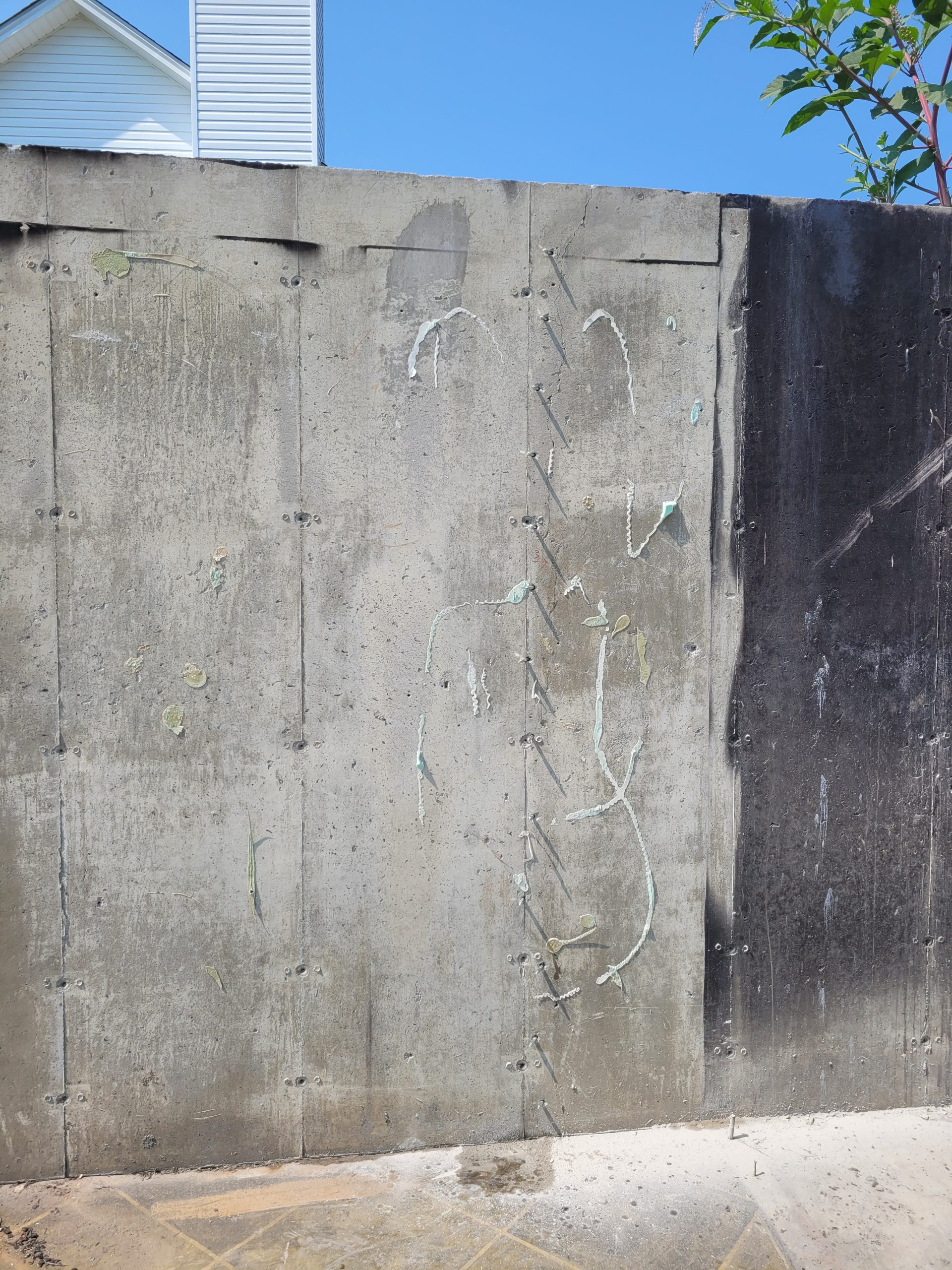
In Roanoke, hydrostatic pressure—the pressure of water-saturated soil against your walls—is a common enemy. While vertical cracks are often just shrinkage, horizontal cracks are a major structural emergency. These indicate that the wall is bowing inward under the weight of the earth and is at risk of total failure.
 The SURE-DRI Engineering Advantage

When it comes to your home’s foundation, an “educated guess” isn’t enough. Many waterproofing companies are run by salespeople who are trained to sell a specific product. At SURE-DRI, we differentiate ourselves by having a licensed structural engineer on staff. We don’t just look for symptoms; we analyze the physics of the movement and the load-bearing capacity of your soil.
By using permanent stabilization methods like helical piers or wall anchors, we stop the movement at its source. Our goal is to provide a “one and done” solution that allows you to sleep soundly, even during the heaviest Virginia rainstorms. Best of all, our structural repairs come with a lifetime transferable warranty, ensuring your home remains a valuable asset for decades to come.
Frequently Asked Questions
Q: How much does foundation repair cost in Roanoke? A: Costs vary depending on the number of piers needed or the extent of the stabilization, but early intervention is always the most cost-effective route. Small cracks caught early are significantly cheaper than a full wall replacement.
Q: Can I fix foundation cracks myself with epoxy? A: Epoxy can seal a crack against water, but it provides zero structural support. If the house is still moving, the epoxy will simply crack again. You must stabilize the foundation before sealing the cosmetic damage.
Q: Does homeowner’s insurance cover foundation repair? A: Typically, no. Most policies exclude “earth movement.” This makes it even more important to maintain proper drainage and address issues before they become catastrophic.
Don’t let a small crack become a major collapse. Protect your home’s structural integrity and your family’s safety. Contact SURE-DRI today for a professional evaluation by our engineering team.
Image Ideas:


