
When your home starts gently sinking into the earth, it’s more than just a quirky characteristic; it’s a serious sign of foundation settlement. You might be noticing cracks in the walls, uneven floors, or stubborn doors that just won’t close right. These are all red flags indicating that the ground beneath your home is shifting, and it’s about time you took notice. Various factors – from the type of soil your house rests on, to weather conditions, to the quality of construction – all play a role in this unnerving occurrence. But what can you do about it? Stay tuned for some enlightening discussions on effective solutions to this deep-seated problem.
Understanding Foundation Settlement
Nearly every homeowner will, at some point, encounter issues with foundation settlement. It’s a process that occurs when the ground under your home compacts and shifts, causing your foundation to sink or settle into the ground. This isn’t an instantaneous event but a gradual one that may take years before it becomes noticeable.
Understanding this phenomenon is critical to identifying it early and taking appropriate actions. You see, the foundation of your home isn’t simply a slab of concrete; it’s a complex structure, designed to distribute the weight of your home evenly across the ground underneath it. When the soil beneath your foundation changes, it can create pressure points or uneven support, causing your foundation to crack, bow, or shift.
Keep in mind, foundation settlement isn’t just about aesthetics or property value; it’s a safety issue. When left unattended, it can cause serious structural damage that puts your property, and potentially its inhabitants, at risk.
Being informed about foundation settlement is the first step towards protecting your home, your investment, and your safety. Stay tuned for our next discussion on the common causes of foundation settlement.
Common Causes of Settlement
As you tackle foundation settlement issues, understanding the common causes aids in finding efficient solutions.
To begin with, the type of soil your foundation sits on can greatly impact settlement.
Additionally, weather conditions and construction practices can exacerbate the problem, leading to further settlement.
Soil Type and Settlement
Imagine your house sitting atop different types of soil, each with its unique characteristics. The soil type plays a critical role in foundation settlement – it’s not just about how solid the ground is, but also about how the soil behaves under varied conditions. Understanding this can help you prevent problems before they arise.
Clay soils, for instance, are highly expansive. They swell when wet and shrink when dry, triggering movement that can cause your foundation to shift.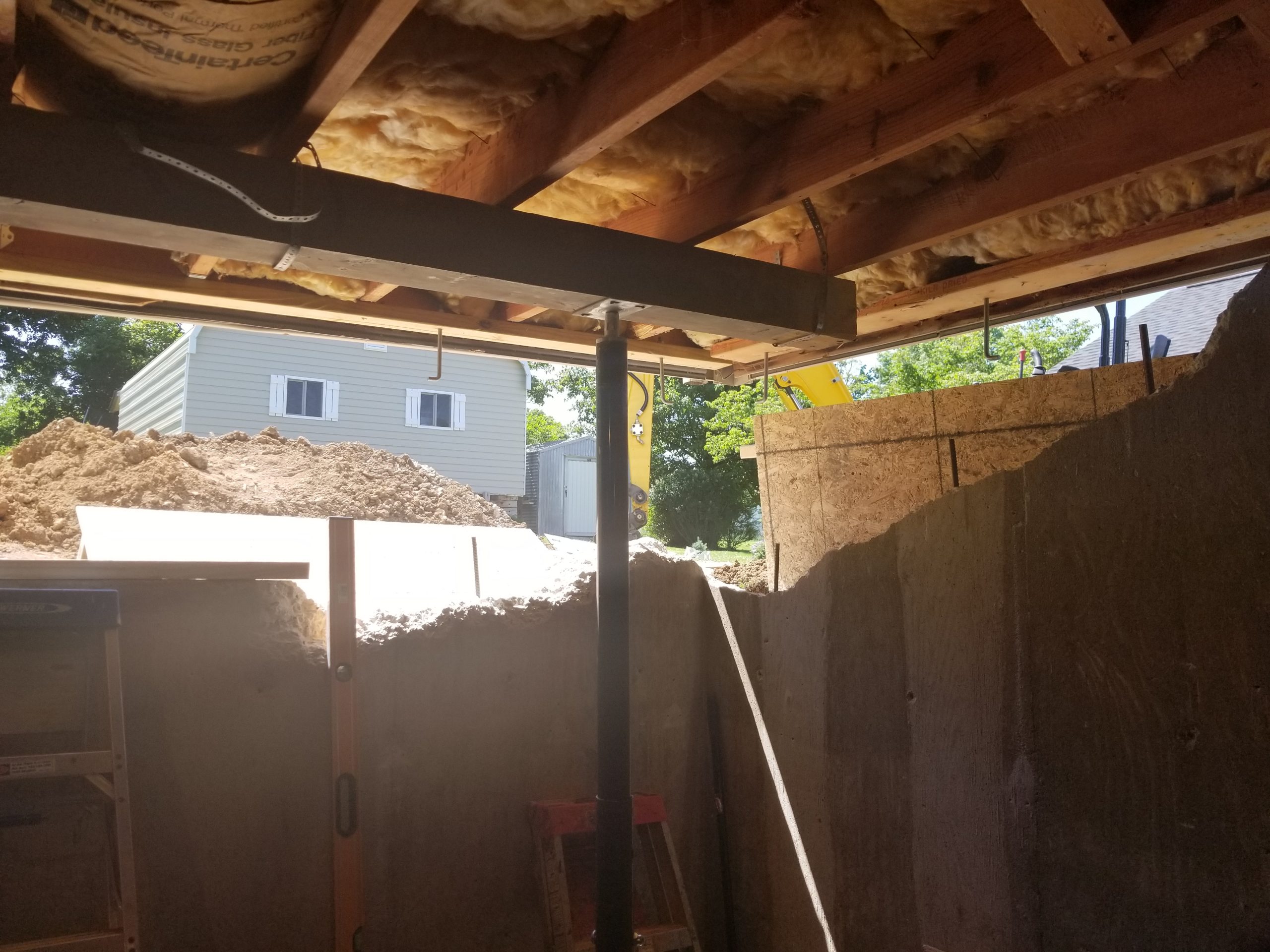
Sandy soils, on the other hand, are prone to shifting and compacting, especially under significant weight. This lack of stability can lead to uneven settling.
Gravel or rock-based soils are typically the most stable, offering good support and drainage. However, if your house is built on fill soils (a mix of soil, rock, and debris), you might face issues.
These soils are often loosely packed and may compress under the weight of your home, leading to settlement over time.
Soil type isn’t something you can change, but it’s something to take into account when building or buying a house. Understanding the soil’s characteristics can guide your decisions, helping you mitigate potential foundation settlement problems.
Impact of Weather Conditions
Weather conditions wield a significant influence on foundation settlement, acting as common culprits in creating structural issues. You’ll find that both extreme precipitation and drought can lead to shifts in the soil that underlies your home’s foundation.
When heavy rain saturates the soil, it expands, exerting pressure against your foundation. This can cause cracking and, over time, lead to settlement. Conversely, in periods of drought, the soil contracts as it dries out, pulling away from your foundation and creating gaps. These voids can lead to uneven foundation settlement, as parts of your home are left unsupported.
Frost heave is another weather-related factor to take into account. When the ground freezes, it expands, pushing up against your foundation. This upward movement can cause your foundation to heave, leading to cracks and other structural damage.
Understanding these impacts of weather conditions on foundation settlement helps you recognize the warning signs early. Regular inspections, particularly after extreme weather events, are key in preventing significant structural damage.
Poor Construction Practices
Your home’s structural integrity can be undermined by poor construction practices, a common cause of foundation settlement. It’s vital to understand how substandard practices can lead to this problem.
Firstly, if your home’s foundation wasn’t correctly compacted during construction, it can cause instability. Compaction is the process of pressing the soil tightly together, increasing its density and reducing air pockets. Without proper compaction, your foundation can shift over time, leading to settlement issues.
Secondly, improper water management on your construction site can cause extensive damage. If the ground around your home wasn’t graded to direct water away, it can accumulate near your foundation, causing soil erosion and ultimately foundation settlement.
Lastly, using low-quality materials or skipping essential reinforcement steps during construction can lead to reduced structural integrity. For instance, the concrete mix used for your foundation should be of a high standard to guarantee strength and durability.
It’s important to address these issues promptly. Left unchecked, they can lead to significant damage, requiring expensive repairs.
Soil-Related Settlement Triggers
Understanding the triggers related to soil settlement is essential for your effective foundation management.
These potential dangers can greatly impact the structural stability of your building, leading to severe damage if not addressed properly.
Let’s explore some effective repair solutions that can mitigate these soil-related risks and provide robust support to your foundation.
Understanding Soil-Related Triggers
The ground beneath your home plays an essential role in your foundation’s stability.
It’s important to understand that soil-related triggers can directly impact the structural integrity of your home.
To begin, let’s consider soil type. Different soils have varying load-bearing capacities. Clays and silts, for instance, are less stable and more prone to shifting, making them less ideal for foundation support.
On the other hand, soils like gravel and sand offer better stability due to their excellent compaction and drainage characteristics.
Next, let’s examine soil moisture content. Changes in moisture can affect soil volume. Excessive rainfall can cause clay soil to expand, putting pressure on your foundation.
Conversely, long periods of dry weather can lead to soil shrinkage, creating gaps where your foundation can settle.
Lastly, consider soil compaction. Poorly compacted soil can compress under your foundation’s weight, leading to settlement.
Proper soil compaction during construction is essential to avoid this issue.
Understanding these soil-related triggers helps you monitor your foundation’s health, letting you intervene early if signs of trouble start to surface.
Potential Soil Settlement Dangers
Countless dangers lurk beneath your home due to soil-related settlement triggers. Beneath your home’s foundation, various soil types can pose distinct risks.
Clay soils, for example, expand when wet and shrink during dry conditions, leading to inconsistent support that can cause your home to settle unevenly. Sandy soils, on the other hand, are prone to shifting and compacting under the weight of your home, thereby causing settlement.
Moreover, if your home is built on fill soil — soil that’s been moved from another location to raise the level of your lot — you’re at an even greater risk. Fill soil isn’t typically as densely packed as the original soil, making it more prone to shifting and settling.
Additionally, environmental factors can exacerbate these dangers. Heavy rain can make soils oversaturated and unstable, while drought can cause them to shrink and provide inadequate support.
Similarly, freezing and thawing cycles can result in soil heaving, creating further instability.
Understanding these potential dangers is key to maintaining the integrity of your home. It’s crucial to monitor changes in your home’s structure, as these could be signs of soil-related settlement issues.
Effective Repair Solutions
Soil-related settlement issues may seem challenging, but there are effective repair solutions available. By gaining an understanding of these, you’ll be equipped to tackle any soil-related settlement problems head-on.
Firstly, there’s the underpinning method. It involves extending the foundation in depth or breadth so it rests on more stable soil. This solution’s ideal when the original foundation isn’t strong or stable enough.
There’s also the slabjacking method. Here, you pump a cementitious mixture beneath the slab. This action lifts the foundation, restoring it to its original level. It’s a quick and economical solution, but it doesn’t address the underlying soil condition.
The third solution is the use of helical or push piers. These are driven into the ground to support the foundation and lift it back to its original position. This method is particularly effective for lightweight structures.
Lastly, there’s soil stabilization. Here, you inject chemical grout into the soil, strengthening it. It’s a great solution when weak, loose soils are causing the issue.
Don’t feel overwhelmed. With a skilled contractor, it’s possible to correct soil-related foundation issues.
Impact of Weather Conditions
Extreme weather conditions can greatly contribute to foundation settlement. As a homeowner, it’s essential to understand how various weather patterns can impact your home’s groundwork.
In periods of intense rainfall, the soil around your foundation absorbs water, causing it to expand. This expansion exerts pressure against your foundation, potentially leading to cracks or shifts.
On the flip side, during prolonged periods of drought, the soil contracts as it dries out. This contraction can cause your foundation to shift, leading to settlement issues.
The freeze-thaw cycle is another weather-related factor to take into account. When the temperature drops below freezing, any water in the soil around your foundation freezes and expands.
Then, when temperatures rise, the ice melts and the soil contracts. This repeated expansion and contraction can disrupt your foundation, causing it to settle or move.
Lastly, reflect on the impact of severe weather events like hurricanes, tornadoes, or floods. These can lead to swift and extreme changes in soil conditions, causing significant damage to your home’s foundation.
Understanding these weather-related factors can help you take proactive measures to mitigate potential foundation settlement.
However, remember that weather is just one of many factors contributing to foundation issues.
Identifying Early Warning Signs
Over time, it’s crucial to be vigilant in noticing early warning signs of foundation settlement. You might observe cracks appearing in walls, floors, or ceilings. These fissures, often hairline at first, can gradually widen and become more evident. You shouldn’t ignore these signs, as they can indicate a serious underlying issue.
Doors and windows that stick or refuse to close properly can also signal a settlement problem. You might notice uneven floors, a common symptom of a shifting foundation. They can be subtly sloping or have noticeable dips and rises. Check for gaps around window frames or exterior doors. Even minor separations can point to significant foundation movement.
Additionally, look for moisture in your basement or crawl space. While this could be due to other factors, it’s frequently a sign of a settling foundation. The shift can create openings, allowing water to penetrate.
Lastly, pay attention to the exterior of your home. Signs here can include leaning walls, stair-step cracks in bricks, and displaced moldings.
Structural Damage From Settlement
You’ve recognized the early warning signs, now let’s consider the structural damage that can result from foundation settlement.
We’ll identify the visual cues of such damage, understand the underlying causes, and explore potential repair solutions.
It’s key to be well-informed to make the right decision for your property’s stability and value.
Identifying Settlement Damage
Spotting signs of structural damage due to settlement isn’t always straightforward.
You’ll need a sharp eye and some knowledge about what to look for. Some common indicators are cracks in the walls, uneven floors, and doors or windows that don’t close properly.
Cracks in the walls may appear as thin, vertical lines. They’re often seen in the corners of rooms or where walls meet ceilings.
These cracks are more than just cosmetic issues, they’re often the first sign of a settling foundation.
Uneven floors can be another clue. You might notice a slope or a dip when you’re walking.
A simple test is to place a ball on the floor and see if it rolls in one direction.
Doors and windows that stick or won’t close properly can also indicate a problem.
This happens when the frames become distorted as the house settles.
Causes of Settlement
While you might think of your home as a solid, unchanging structure, a variety of factors can lead to foundation settlement and subsequent structural damage. It’s not always about poor construction or materials. In fact, the causes are often deeply rooted in the ground beneath your home.
Soil type can play a significant role in foundation settlement. Some soils, like clay, expand when wet and contract when dry, causing the foundation to move. Similarly, sandy soils may shift under heavy loads, leading to uneven foundation support and settlement.
Another major contributor to foundation settlement is improper soil compaction. If the soil beneath your home wasn’t adequately compacted before construction, it could compress over time, leading to foundation settlement.
Changes in moisture levels in the soil can also cause foundation settlement. Excessive rainfall, poor drainage, or even a plumbing leak can oversaturate the soil, causing it to lose strength and result in foundation settlement.
Finally, environmental factors such as earthquakes or other ground movements can cause sudden and significant foundation settlement.
Understanding these causes won’t fix your problem, but it’s the first step in preventing further damage and finding the right solution.
Repair Solutions Explored
After gaining an understanding of the causes, it’s vital to explore potential repair solutions for structural damage resulting from foundation settlement.
You’ll find that there are several methods, each with its unique approach and effectiveness.
One common solution is underpinning, where additional support is added to the foundation. This process involves excavating sections beneath the existing foundation and pouring concrete underpinnings. This method strengthens the foundation and helps redistribute the load.
For more severe cases, you might consider the process of slabjacking. It’s a more invasive method where a mixture of cement and soil is injected beneath the slab to lift it back to its original level. It’s a relatively quick and efficient process, but it requires professional expertise to guarantee proper execution.
Alternatively, there’s piering or piling, where steel pipe pilings are driven into the ground to support and stabilize the foundation. This is particularly effective for homes built on expansive soil or clay.
Professional Assessment Importance
Understanding the significance of a professional assessment in the context of foundation settlement is crucial. You might detect signs of foundation issues, but only a trained professional can accurately diagnose the problem’s extent and suggest the most effective remedies.
A professional assessment involves an extensive examination of your property, both inside and out. Pros use special equipment and techniques to identify the severity and root cause of the settlement. They’re looking for signs of soil instability, water damage, poor construction, or changes in the environment that could exacerbate the issue.
But it’s not just about identifying problems. A professional assessment also includes a detailed plan for repairs. It’s an actionable roadmap that outlines the steps you’ll need to take to fix your foundation. This plan is tailored to your specific situation, taking into account factors like your home’s age, construction type, the extent of the damage, and your budget.
Popular Foundation Repair Methods
In the domain of foundation repairs, several popular methods stand out due to their efficacy and reliability.
For starters, underpinning is a tried-and-true method that involves extending the foundation depth or breadth to more stable soil. You’ll often see this method used when the original foundation is no longer strong or stable enough.
Another method is slabjacking. This involves pumping a cement mixture under the slab to raise it back to its original position. It’s a quick and less intrusive method, ideal for minor settlements.
Then there’s piering, a technique where steel posts are driven through unstable soil and hydraulic jacks are used to raise and stabilize the concrete slab. It’s more suited for more severe cases of settlement where the soil conditions are poor.
Lastly, you have seawall repairs. These are essential for properties located near bodies of water. This method involves driving steel sheet piling to prevent erosion of soil, thereby stabilizing the foundation.
DIY vs. Professional Repairs
Deciding between do-it-yourself (DIY) and professional repairs for your foundation can be a tough call.
There’s a balance to strike here. On the one hand, you might be inclined towards DIY repairs due to the cost savings. If the damage is minor, such as small cracks, DIY can be a viable option.
However, it’s crucial to understand that foundation repairs require specific skills and expertise. You need to accurately diagnose the problem, select the right method, and execute it flawlessly.
This is where professional repairs come into play. Professionals have the knowledge and experience to identify the underlying cause of the problem, propose an effective solution, and prevent further damage.
Yes, it’s more expensive, but the cost is justified when you consider the risks associated with improper repairs, such as further structural damage or decreased property value.
Preventive Measures for Settlement
Having weighed the pros and cons of DIY versus professional repairs, it’s clear that prevention is better than cure when it comes to foundation settlement.
There are several proactive steps you can take to protect your home’s foundation from settling.
First, verify proper drainage around your property. This includes having functional gutters and downspouts to divert rainwater away from the foundation. If necessary, install a French drain system to handle excess groundwater.
Second, regulate the moisture level around the foundation. Don’t allow the soil to become too dry or too saturated. Both conditions can lead to soil shrinkage or expansion, respectively, which can cause foundation settlement.
Third, consider the quality of the soil on which your house is built. Avoid building on expansive clay or fill soils, as these are prone to shifting and can lead to foundation problems. If you’re in the construction phase, opt for compacted gravel or a pile foundation.
Lastly, regularly inspect your foundation for cracks or other signs of distress. Early detection can prevent minor issues from escalating into major repairs.
Frequently Asked Questions
What Is the Average Cost of Foundation Settlement Repairs?
You’re probably wondering about the cost of foundation settlement repairs. On average, you’re looking at a range between $5000-$7000. However, severe cases can reach up to $10,000. It’s best to get multiple estimates.
How Long Does a Typical Foundation Repair Job Take?
It’s not a walk in the park to estimate. However, typical foundation repair jobs can take anywhere from a few days to a week, depending on the severity of the damage and the repair method used.
Does Home Insurance Cover Foundation Settlement Repairs?
Typically, home insurance doesn’t cover foundation settlement repairs. It’s considered a maintenance issue, not accidental damage. However, if it’s caused by a covered peril like a flood, they might. Always check your policy’s specifics.
Is It Safe to Live in a House During Foundation Repair?
Yes, it’s generally safe to live in your house during foundation repairs. However, you’ll feel like you’re living on a construction site. Noise, dust, and some minor disruptions to daily routines are inevitable.
What Are the Possible Health Risks Associated With Foundation Settlement?
Foundation settlement can lead to mold growth and poor indoor air quality. You’re at risk of respiratory issues, allergies, and asthma. Cracks from settling might also release hazardous radon gas, increasing your risk of lung cancer.
Don’t let your dream house turn into the leaning tower of Pisa! Foundation settlement, that sneaky culprit, can result from soil changes, weather, or shoddy construction. Cracks, uneven floors, sticking doors – these are your red flags! Call in the pros for a thorough check and effective repairs like underpinning or slabjacking. But prevention is always better than cure. Maintain that moisture balance, guarantee proper drainage, and keep your castle standing tall and steady!