Recognizing the Warning Signs of Foundation Settlement in Daleville Homes
Foundation settlement occurs when the soil beneath a home’s concrete footings can no longer support the weight of the structure. Because movement is rarely uniform, different sections of the home sink at varying rates, placing immense shear stress on walls and framing.
Homeowners in Botetourt County should watch for several key warning indicators:
- Exterior Masonry Cracks: Distinctive “stair-step” cracks following mortar lines in brick or cinder block walls are a hallmark sign of active foundation movement.
- Interior Wall & Frame Distress: Drywall cracks radiating diagonally from window and door corners, along with interior doors that stick, rub, or refuse to latch properly.
- Floor Displacement: Sloping, uneven, or sagging floors along ground-level rooms or basements.
- Structural Detachment: Front porches, chimneys, or garage additions visibly pulling away from the primary structure.
Why Botetourt County Soil Accelerates Structural Movement
Daleville’s unique regional topography and soil chemistry play a central role in foundation instability. Much of Southwestern Virginia rests on high-plasticity Blue Ridge clay. This expansive red clay acts like a dense sponge—swelling significantly when saturated during heavy Appalachian rainstorms and shrinking dramatically during dry summer spells.
Additionally, many residential developments along Botetourt’s rolling hillsides were constructed on variable terrain requiring earth cut-and-fill prep. Over decades, uncompacted fill dirt beneath footings consolidates under the weight of the house. Combined with seasonal wet-dry cycles, this soil movement deprives foundation footings of continuous support, causing sections of the foundation to sink.
Cosmetic Patching vs. Deep Structural Stabilization
When stair-step cracks appear, many homeowners make the mistake of hiring a mason to smear fresh mortar or hydraulic cement over the gap. While this temporarily hides the cosmetic defect, it does absolutely nothing to stop the underlying soil failure. As the foundation continues to shift, the fresh mortar will pop out and crack again within months.
To fix foundation settlement permanently, you must bypass the unstable surface clay entirely and anchor the home to stable, load-bearing soil or bedrock deep below the surface.
The Engineering Solution: Steel Helical Piers
The gold standard for stabilizing settling foundations in Daleville is the installation of high-strength steel helical piers. Think of helical piers as heavy-duty industrial screws engineered to function as underground stilts.
Here is how the structural repair process works:
- Footing Exposure: Small, targeted excavation locations are cleared adjacent to the foundation wall at designated load points, minimizing disturbance to surrounding landscaping.
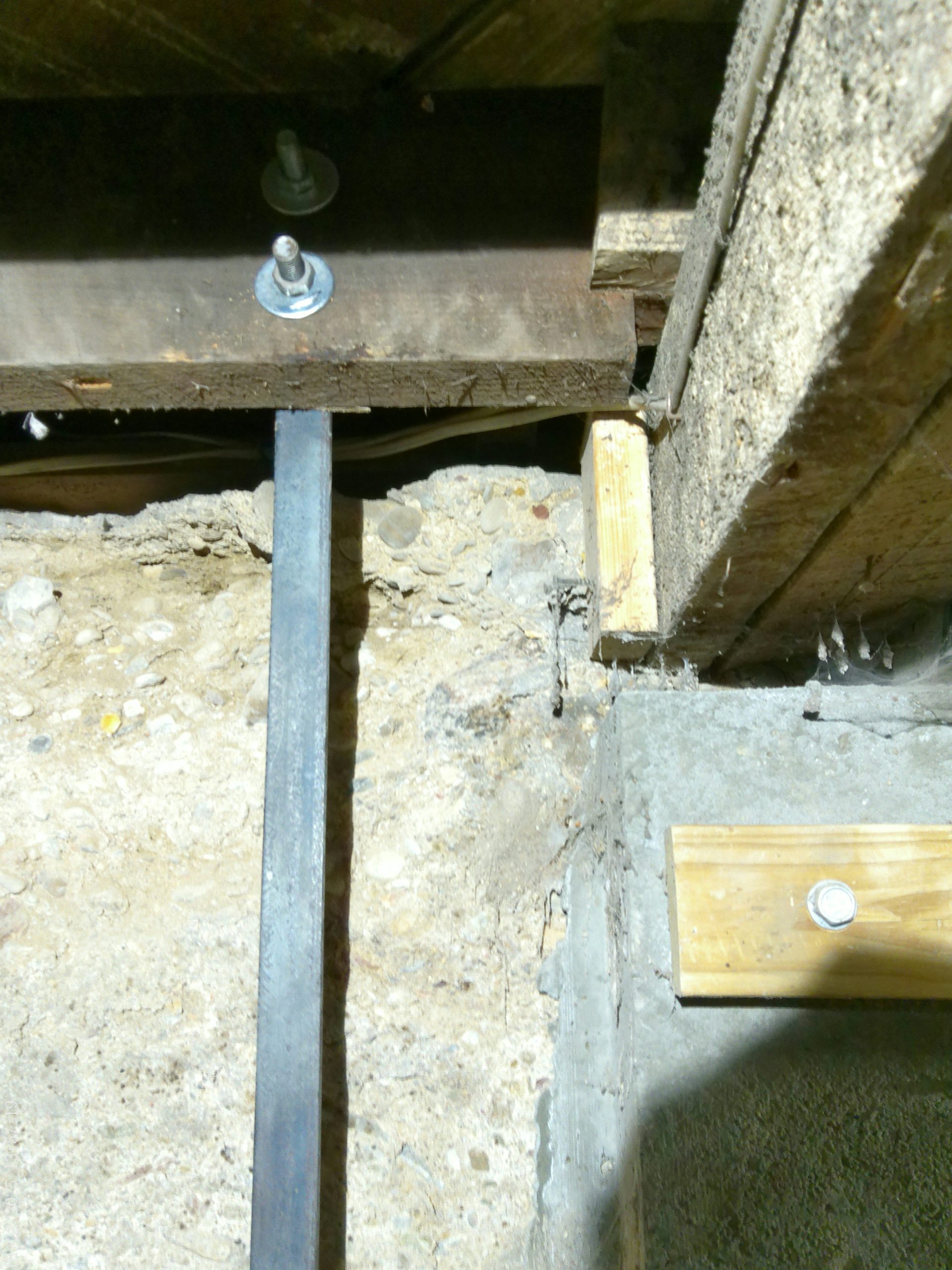
- Bracket Attachment: Heavy-duty steel foundation brackets are securely mounted to the underside of the concrete footing.
- Pier Driving: Using hydraulic machinery, steel pier shafts with helical plates are driven deep into the earth, rotating through unstable clay until they reach dense, competent strata or bedrock capable of bearing the load.
- Load Transfer & Lift: Once verified by pressure gauges, the weight of the home is transferred off the unstable soil and onto the piers. Where feasible, hydraulic jacks are used to carefully lift the home back toward its original level position, closing drywall and masonry cracks.
Frequently Asked Questions
How do I know if my brick mortar cracks are cosmetic or structural?
Thin, vertical hairline cracks can occasionally result from normal concrete curing or thermal expansion. However, diagonal “stair-step” cracks running through block or brick mortar lines strongly indicate active differential foundation settlement and should be inspected by a professional immediately.
Will installing helical piers destroy my lawn or flowerbeds?
No. Unlike full exterior excavation, helical pier installation requires minimal trenching at specific bracket locations along the foundation wall. Hand equipment or mini-excavators are used to preserve surrounding lawns, porches, and landscaping as much as possible.
How long does a helical pier foundation repair last?
When installed correctly, heavy-gauge steel helical piers provide a permanent structural fix. SURE-DRI backs its foundation piering installations with a transferrable Full Lifetime of the Structure Warranty, ensuring your home’s equity and stability remain fully protected.