
Walking across your living room shouldn’t feel like stepping onto a trampoline. If your hardwood floors exhibit an uncharacteristic spring, or if your kitchen subfloor feels spongy underfoot, your home is sending a clear warning. In Christiansburg and across Montgomery County, bouncing floors are rarely a simple cosmetic issue—they are a direct symptom of severe environmental stress taking place in the crawlspace beneath your feet.
Recognizing the Warning Signs of Crawlspace Floor Failure
Floor deflection develops gradually, making it easy for homeowners to overlook early warning signs. However, as moisture compromises sub-floor framing, physical and atmospheric symptoms become impossible to ignore.
Physical Symptoms You Can Feel Underfoot
- Sponginess or Deflection: A noticeable give or bounce when walking across high-traffic living areas.
- Gaps at Baseboards: Interior walls pulling away from baseboard trim, leaving visible gaps along hardwood or tile.
- Sticking Interior Doors: Door frames slanting out of square, causing doors to bind, rub, or fail to latch properly.
- Unlevel Furniture: Cabinets, bookcases, or tables tilting noticeably away from perimeter walls.
Atmospheric Red Flags Inside Living Areas
Because of the “stack effect,” up to 50% of the air in your living room can originate directly from your crawlspace. If high humidity and wood rot are present underneath the home, you will notice persistent cupping or crowning along hardwood floor planks, indoor relative humidity consistently exceeding 60%, and a distinct damp, earthy odor rising from floor registers whenever your HVAC system cycles on. 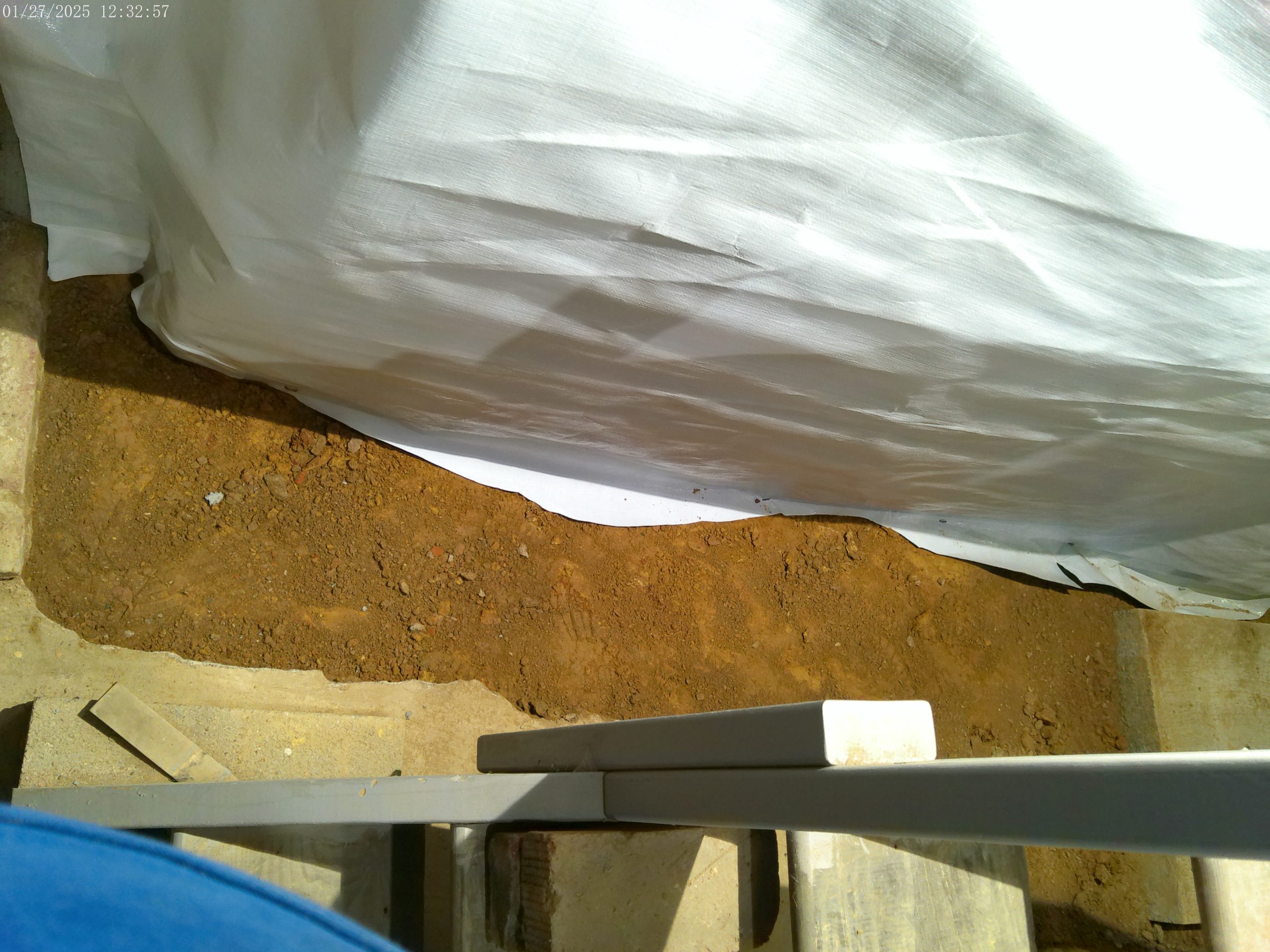
Geotechnical & Climatic Drivers in Montgomery County
To understand why floors lose their structural integrity, you must examine the unique microclimate of Southwestern Virginia. Christiansburg experiences warm, highly humid summers paired with heavy mountain precipitation. Traditional building methods in our region relied heavily on open foundation vents—a practice modern building science has proven to be deeply flawed.
The Vented Crawlspace Trap
During humid summer months, hot, moisture-laden outdoor air enters open crawlspace vents. As this warm air hits the naturally cooler environment beneath your home, its temperature drops rapidly. Cold air cannot hold as much water vapor as warm air, causing relative humidity to spike to 100% dew point directly against your floor joists, sub-flooring, and main girder beams.
Wood-Decaying Fungi & Structural Weakening
When timber moisture content remains above 20% for extended periods, microscopic wood-decay fungi (such as Coniophora puteana) germinate and thrive. These organisms feed directly on the cellulose and lignin fibers that give wooden joists their load-bearing strength. As the wood rots, its structural capacity collapses, leading directly to sagged beams and bouncing floors.
Diagnostic Comparison: Cosmetic Floor Sag vs. Moisture Structural Decay
Distinguishing between normal aging and active structural decay is critical when selecting the appropriate repair strategy:
| Symptom Indicator | Normal Floor Board Aging | Crawlspace Moisture Decay |
|---|---|---|
| Deflection / Bounce | None (Solid & firm underfoot) | High (Springy, unlevel, dipping) |
| Joist Condition | Dry, firm, natural timber color | Soft, darkened, flaking, damp |
| Sub-Floor Moisture | Below 15% Wood Moisture Equivalent | Exceeds 20% (Active rot threshold) |
| Baseboard Alignment | Minimal, uniform seam aging | Widening gaps; floor pulling away |
| Primary Solution | Surface sanding or refinishing | Encapsulation + Heavy Jack Posts |
The Two-Part Engineering Solution: Lift and Seal
Permanently resolving bouncing floors requires a comprehensive approach. Simply adding structural supports without addressing high humidity will allow wood rot to continue, while sealing a crawlspace without stabilizing damaged joists leaves your floors permanently unlevel.
Part 1: Heavy-Duty Structural Jack Posts
To restore structural integrity, heavy-duty, adjustable steel jack posts are installed over solid, poured concrete footings beneath weak girder beams. These industrial-grade supports relieve strain on compromised joists and allow trained technicians to carefully lift sagging subfloors back toward their original level.
Part 2: Full Perimeter Vapor Barrier Encapsulation
Once structural support is restored, the moisture source must be eliminated permanently. Full encapsulation involves sealing raw earth floors and concrete walls with a heavy-duty, zero-permeability antimicrobial vapor barrier. External vents are completely sealed, rim joists are insulated, and a dedicated crawlspace dehumidification system is installed to keep relative humidity strictly below 50% year-round.
Why Engineering Oversight Matters for Sub-Floor Repairs
Lifting a settled floor system requires precise structural calculation. Raising a girder beam too quickly or without proper load distribution can crack interior plaster, damage drywall, shear plumbing lines, or misalign door frames throughout your home.
As a licensed Class A Contractor with a licensed structural engineer on staff, SURE-DRI performs precise load calculations before installing heavy jack posts or altering structural supports. This technical rigor ensures your home is lifted safely, stabilizing your foundation without causing secondary interior damage.


