
Waking up after a heavy Blue Ridge downpour to find pooling water in your basement is a frustrating experience for any homeowner. In the Roanoke Valley, our homes face unique geological challenges. Our regional soils are heavily packed with dense red clay, which acts like a giant sponge. When storms hit, this clay saturates, expands, and traps thousands of gallons of water directly against your below-grade foundation walls.
The Enemy Below: Understanding Hydrostatic Pressure
 To understand why traditional waterproofing methods fail, you have to understand how water enters your home. As the clay soil outside your basement becomes waterlogged, it creates hydrostatic pressure. This is the immense force of expanding groundwater pushing relentlessly against your foundation.
Water always takes the path of least resistance. In residential construction, that path is almost always the cove joint—the small, structural seam where your poured concrete floor slab meets your vertical foundation walls. When the water table rises beneath your home, hydrostatic pressure forces groundwater up through this joint and through microscopic fissures in concrete blocks. Trying to simply block this water from the outside with a painted coating or plastic membrane is a temporary bandage; over time, the relentless pressure will break through, crack the seal, and flood your space again.
The 4-Phase Sub-Floor Structural Remediation Process
Instead of trying to hold back thousands of pounds of water pressure, an interior drainage track system works with physics by creating an intentional path of least resistance that safely channels and removes the water before it ever touches your basement floor.
- Slab Perimeter Trenching: Technicians neatly score and break away a continuous 12-inch channel of the concrete slab floor along the interior perimeter of your basement walls, completely exposing the top of the solid foundation footing.
- Drainage Track Inlay: An engineered, high-flow perforated drainage pipe or specialized track system is nestled directly onto the footing. It is precisely sloped toward a sump basin and surrounded by washed aggregate stone to filter out clogging clay silt.
- Sump Pump Integration: A heavy-duty, high-performance cast iron sump pump system—equipped with a dedicated battery backup network—is sunk into the lowest point of the drainage run to seamlessly collect and discharge water away from the home.
- Concrete Restoration: The floor channel is repoured with clean concrete flush to your original slab, leaving a precision-engineered gap along the wall margin to capture any future wall seepage without letting it reach your living space.
Why Interior Systems Outperform Exterior Excavation in Virginia
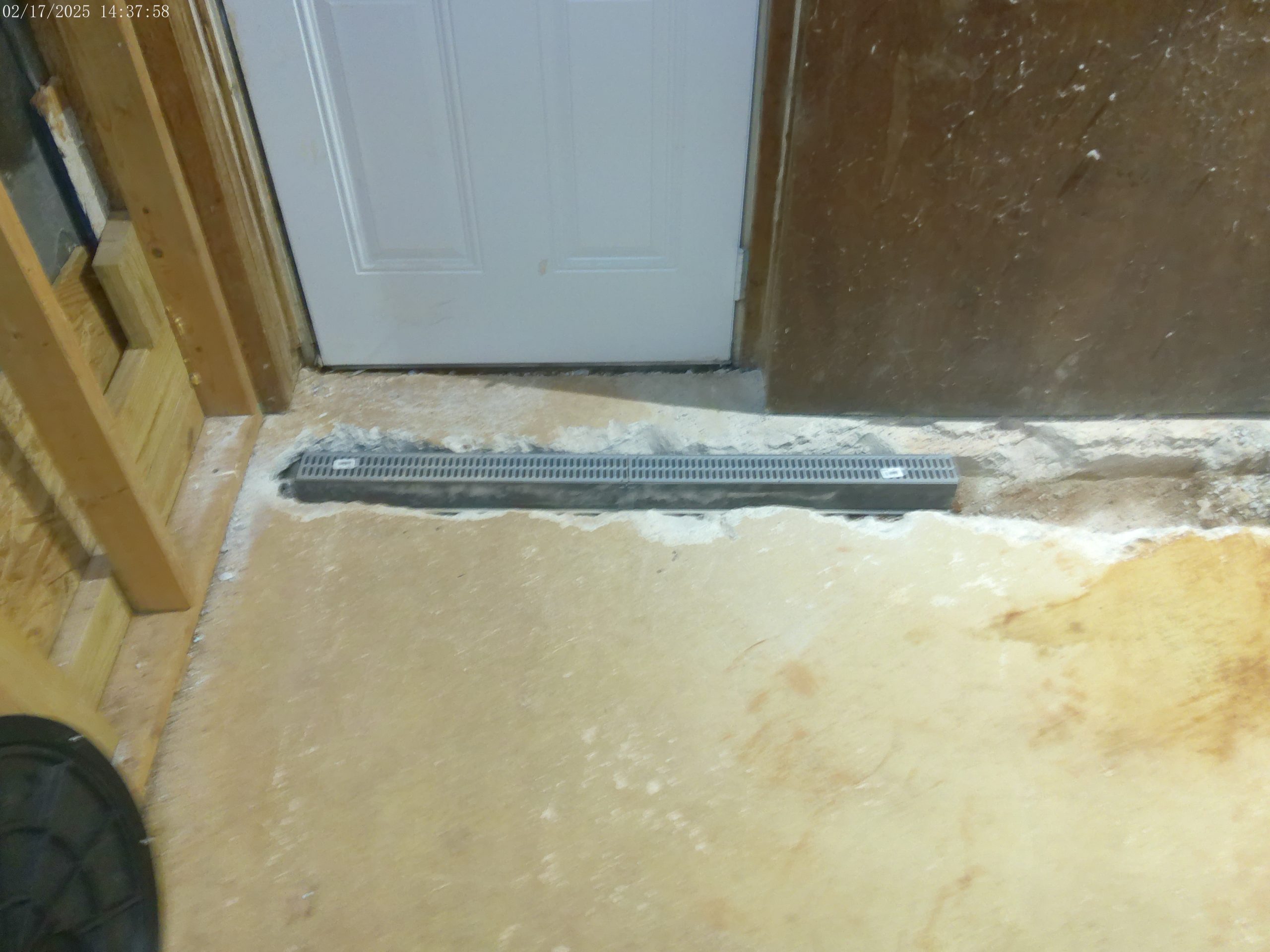
For homes in Roanoke, Salem, and surrounding counties, interior sub-floor systems offer distinct structural and financial advantages:
- Landscaping Preservation: Exterior waterproofing requires digging a massive trench around your home. This means destroying expensive landscaping, mature trees, porches, walkways, and patios. Interior systems keep the mess entirely self-contained.
- Clog Resistance: Exterior drainage pipes are buried deep under shifting dirt, making them highly vulnerable to root intrusion, soil collapse, and clogging from heavy red clay. Interior systems sit protected beneath your slab, remaining clean and serviceable for a lifetime.
- Continuous Hydrostatic Relief: Exterior membranes try to fight water pressure. Interior tracks relieve it. By constantly draining the water table around your footings, the system prevents the pressure buildup that causes basement walls to bow or crack inward over time.
Frequently Asked Questions About Sub-Floor Waterproofing
Q: Does installing an interior sub-floor drainage track weaken my home’s foundation?
A: No, absolutely not. The interior drainage channel is installed entirely on top of or alongside the concrete footing, well inside the structural footprint of the house. The process does not alter, chip, or diminish the thickness of your structural foundation walls or the deep load-bearing footings underneath.
Q: Will an interior drainage track system handle crawlspace moisture as well?
A: Yes. The exact same sub-floor mechanics apply to dirt or concrete crawlspaces. For comprehensive environmental health, combining an interior drainage pipe layout with a heavy-duty crawlspace encapsulation vapor barrier membrane ensures that both liquid water and rising moisture vapor are completely managed.
Q: Can I finish my basement after an interior drainage system is installed?
A: Yes, in fact, it is highly recommended. Installing a professional sub-floor drainage network is a vital prerequisite before adding framing, drywall, and flooring to any below-grade room. It ensures your remodeling investment is permanently protected against mold, mildew, and water damage.
Stop Wet Weather Anxiety Permanently
A damp basement or a neglected leak will only cause more severe structural issues and hazardous mold growth over time. Since 2002, Keith Martin and the dedicated local team at SURE-DRI have provided honest, permanent moisture management solutions for homeowners throughout Southwestern Virginia.
Take control of your home’s health today. Call the SURE-DRI team at 540-924-3362 or email us at HelpMyBasement@gmail.com to schedule your professional, no-obligation on-site basement evaluation and written estimate.


